
No score · no grade · no verdict
What's there
Description only — measurements, positions, shapes.
- ◦
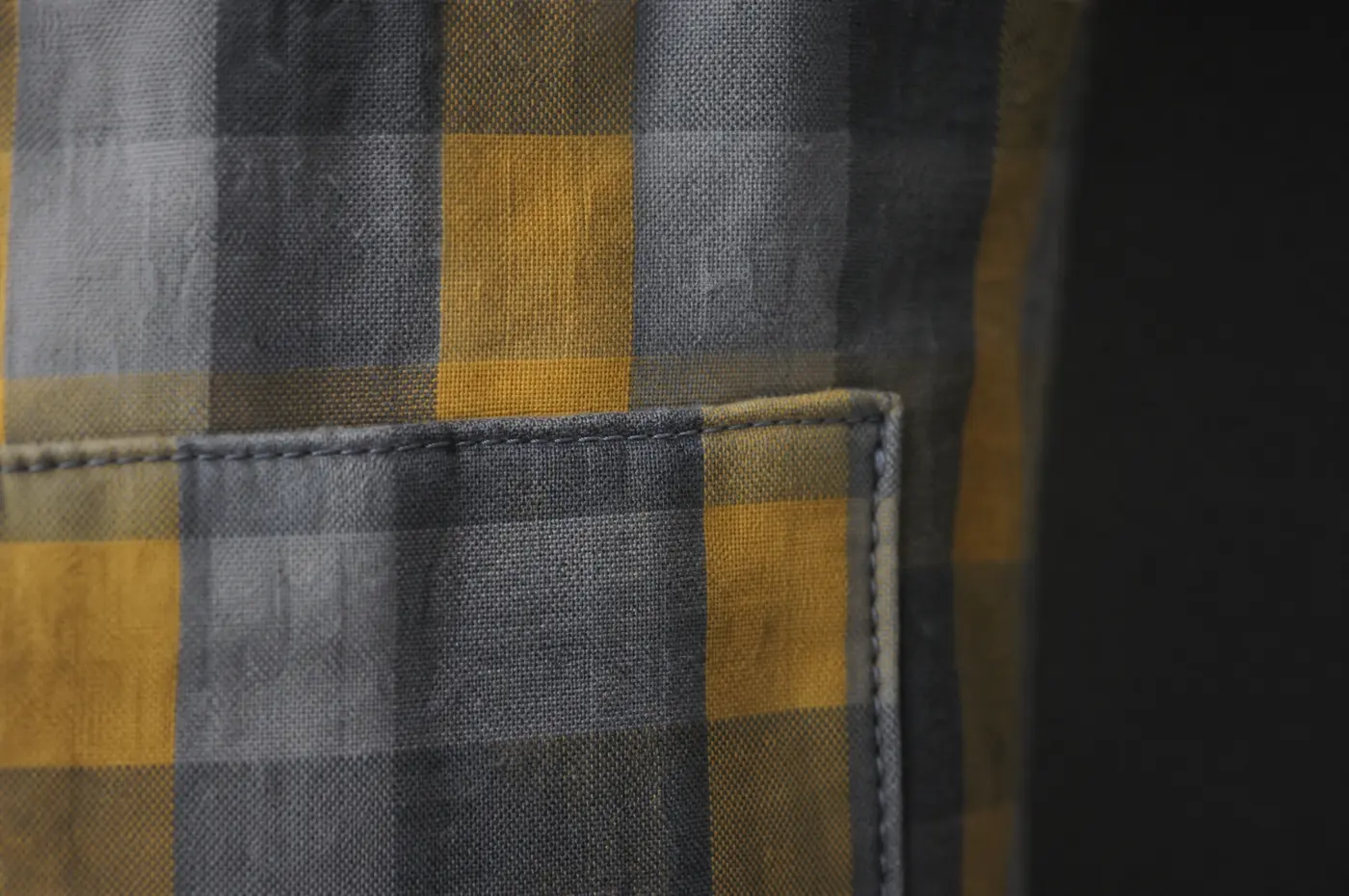
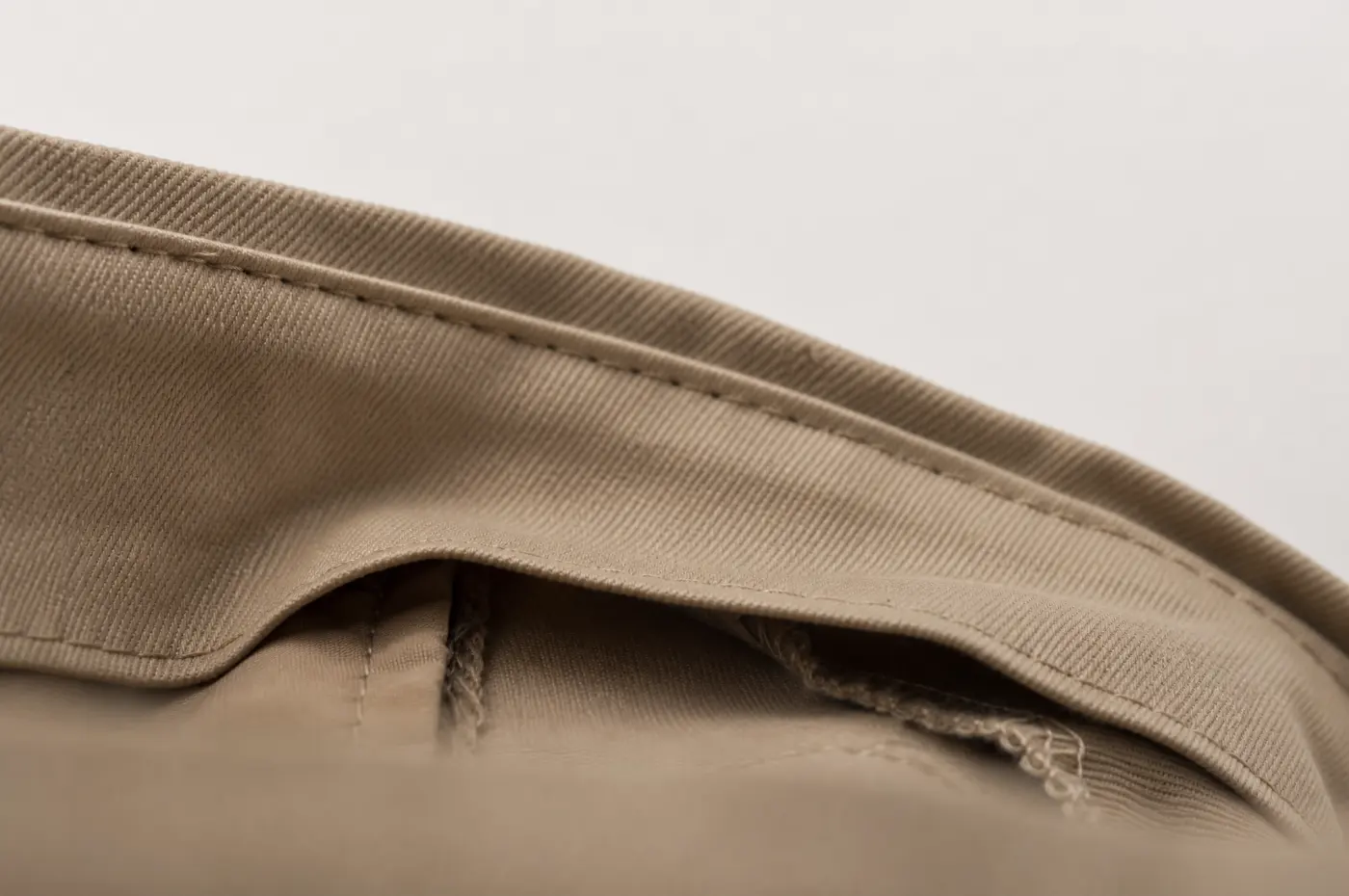
Patch pocket, upper edge
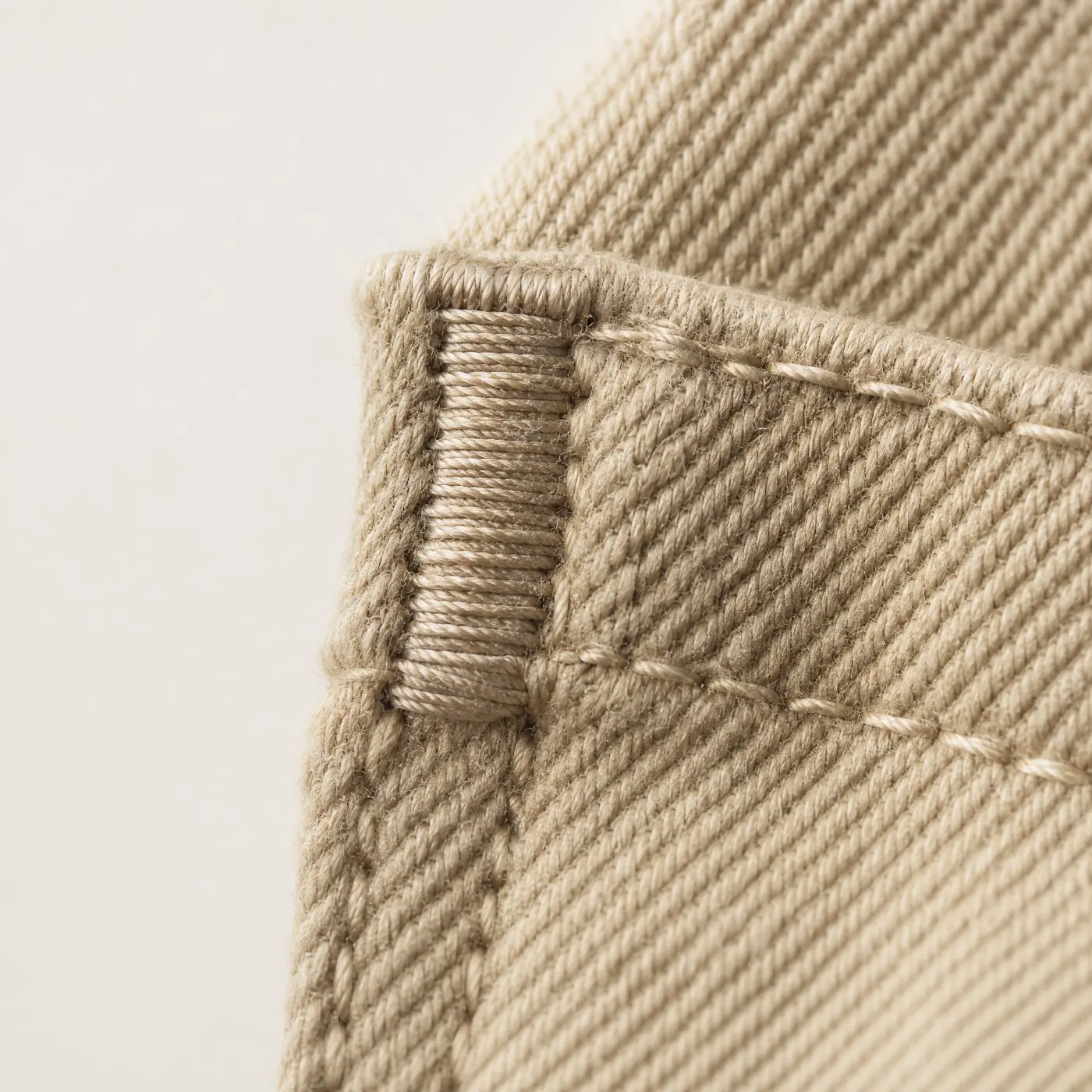
The horizontal line of the check continues across the pocket edge within about one millimetre. The vertical line is offset by roughly three millimetres.
- ◦
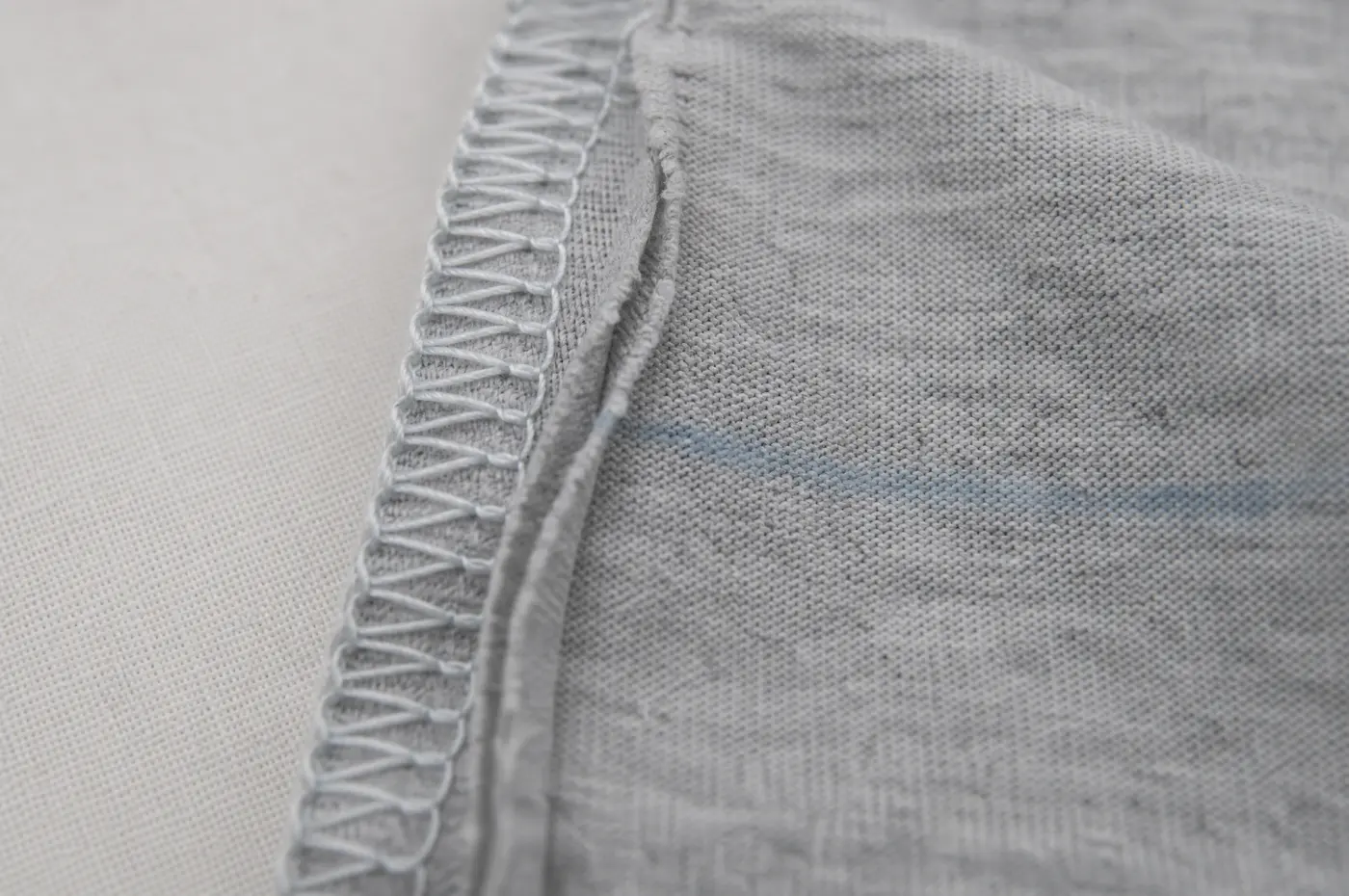
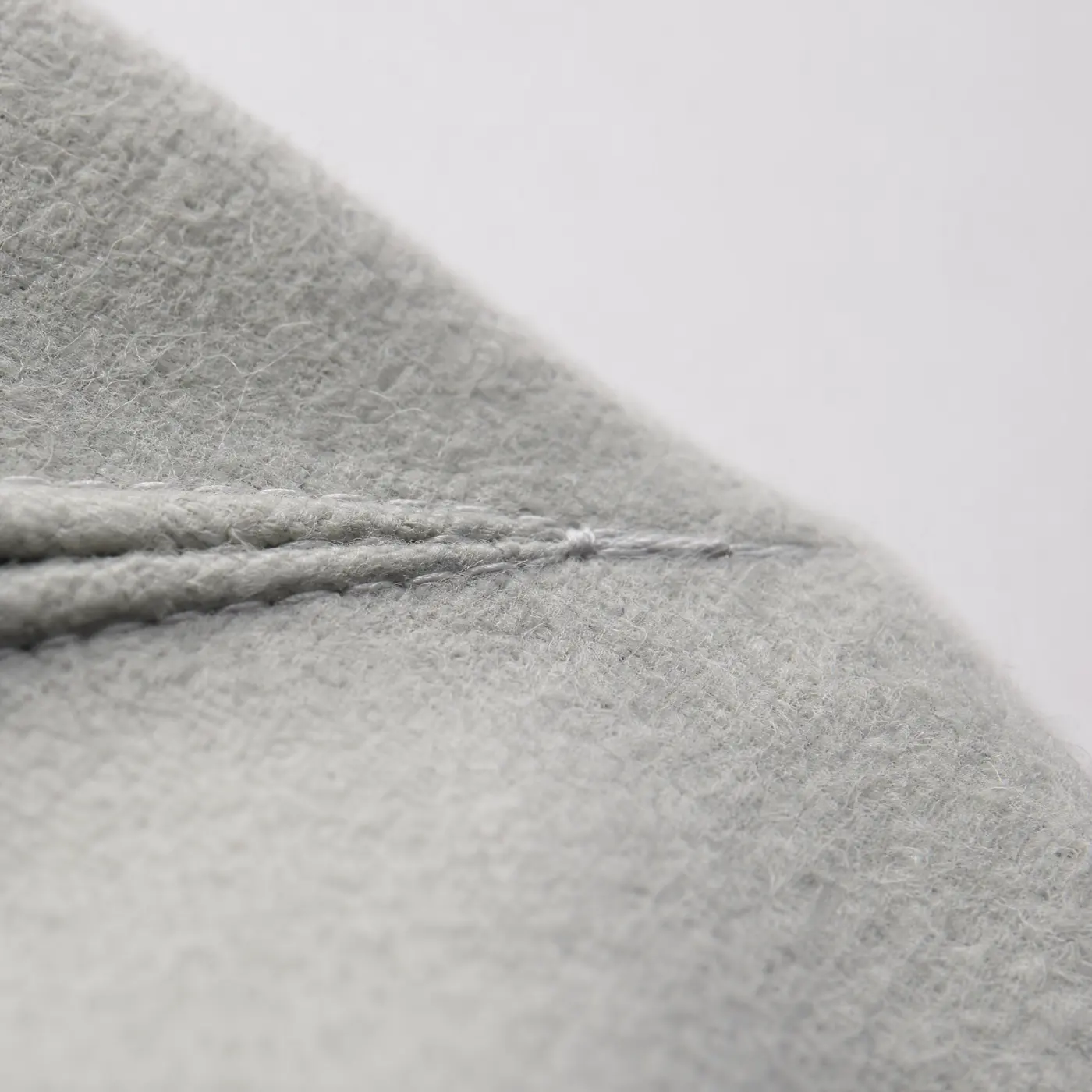
Side seam, inside
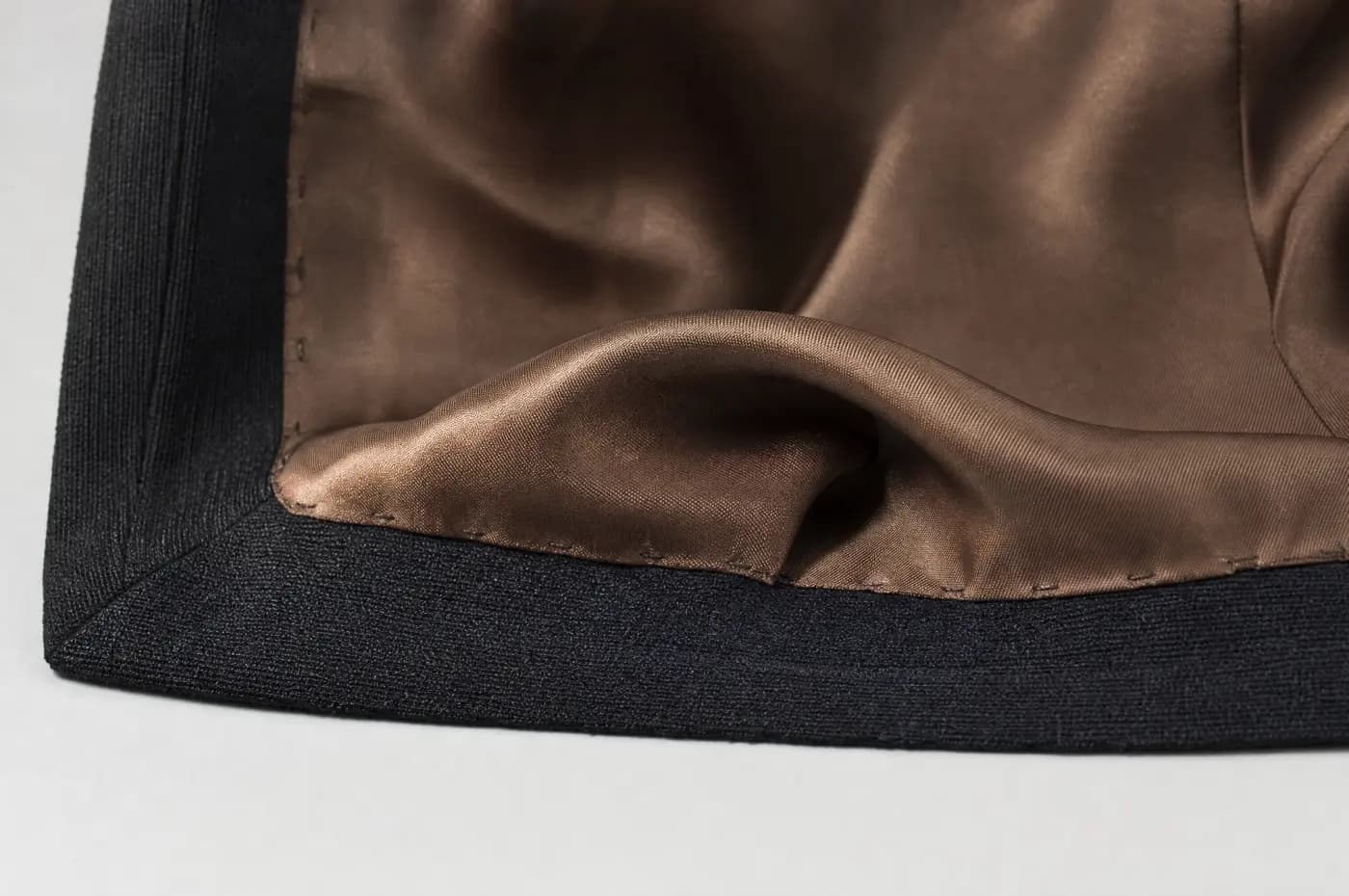
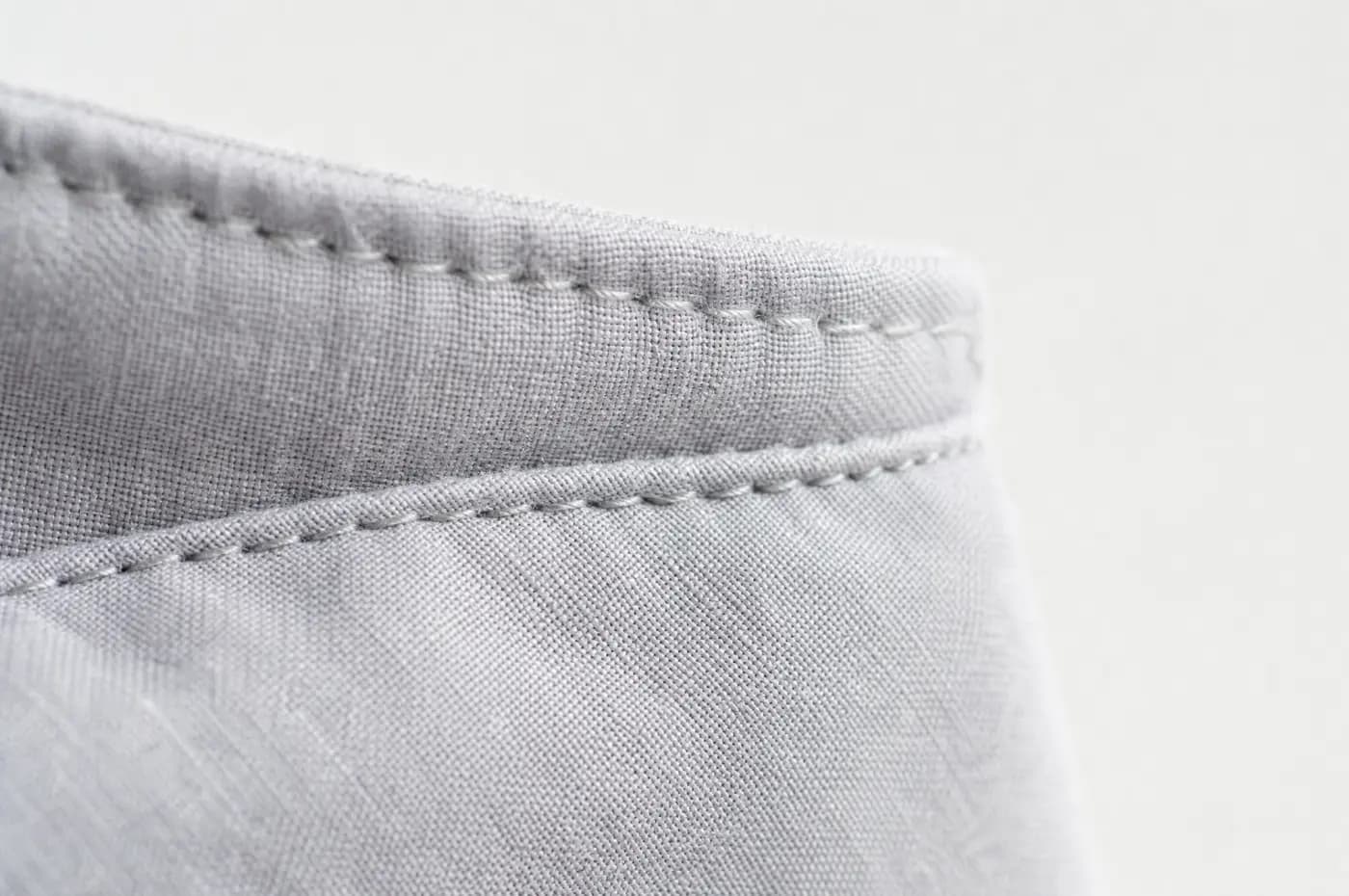
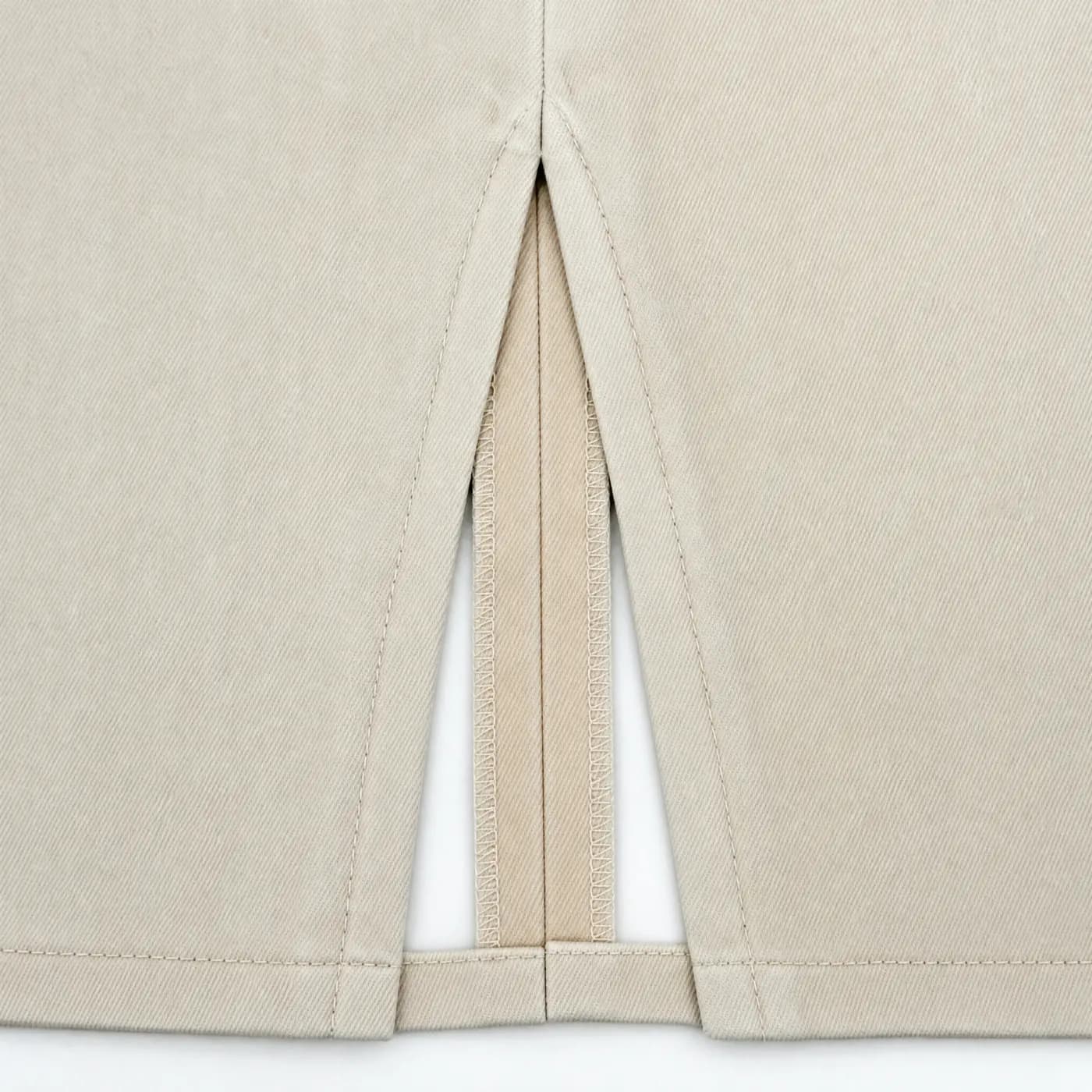
The seam allowance is wrapped in looped thread along its whole length. The looping thread is white; the shirt is grey.
- ◦
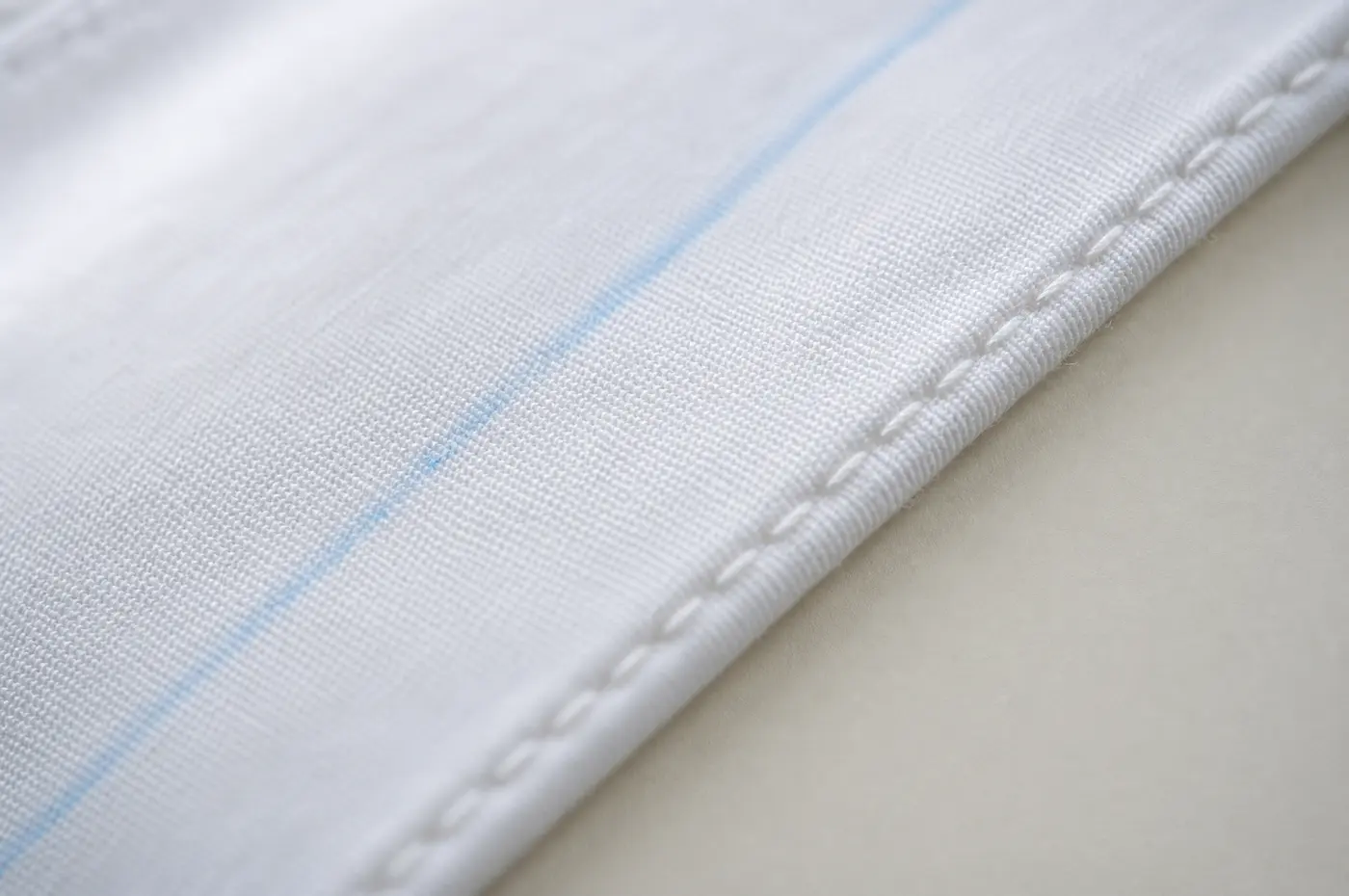
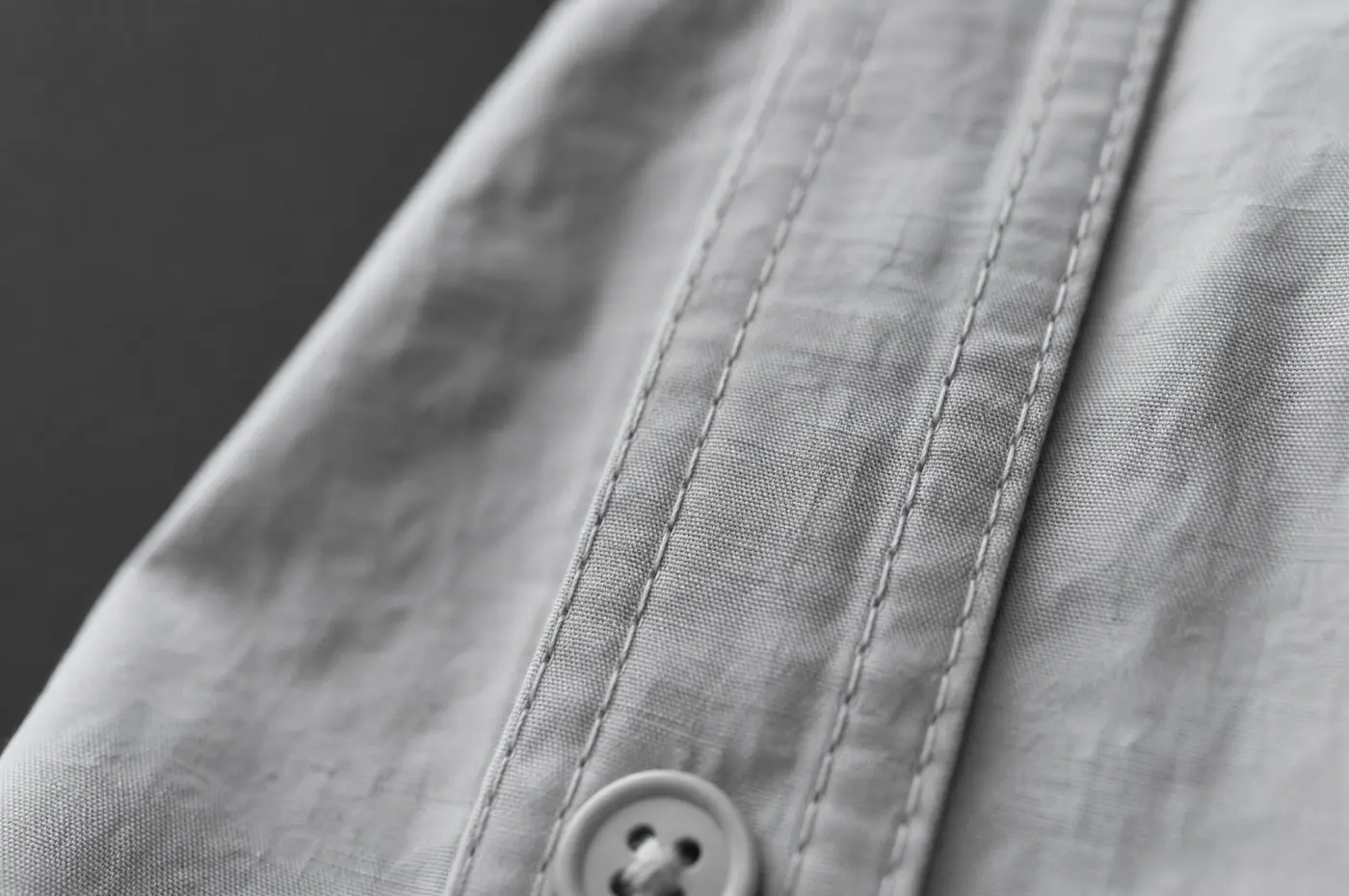
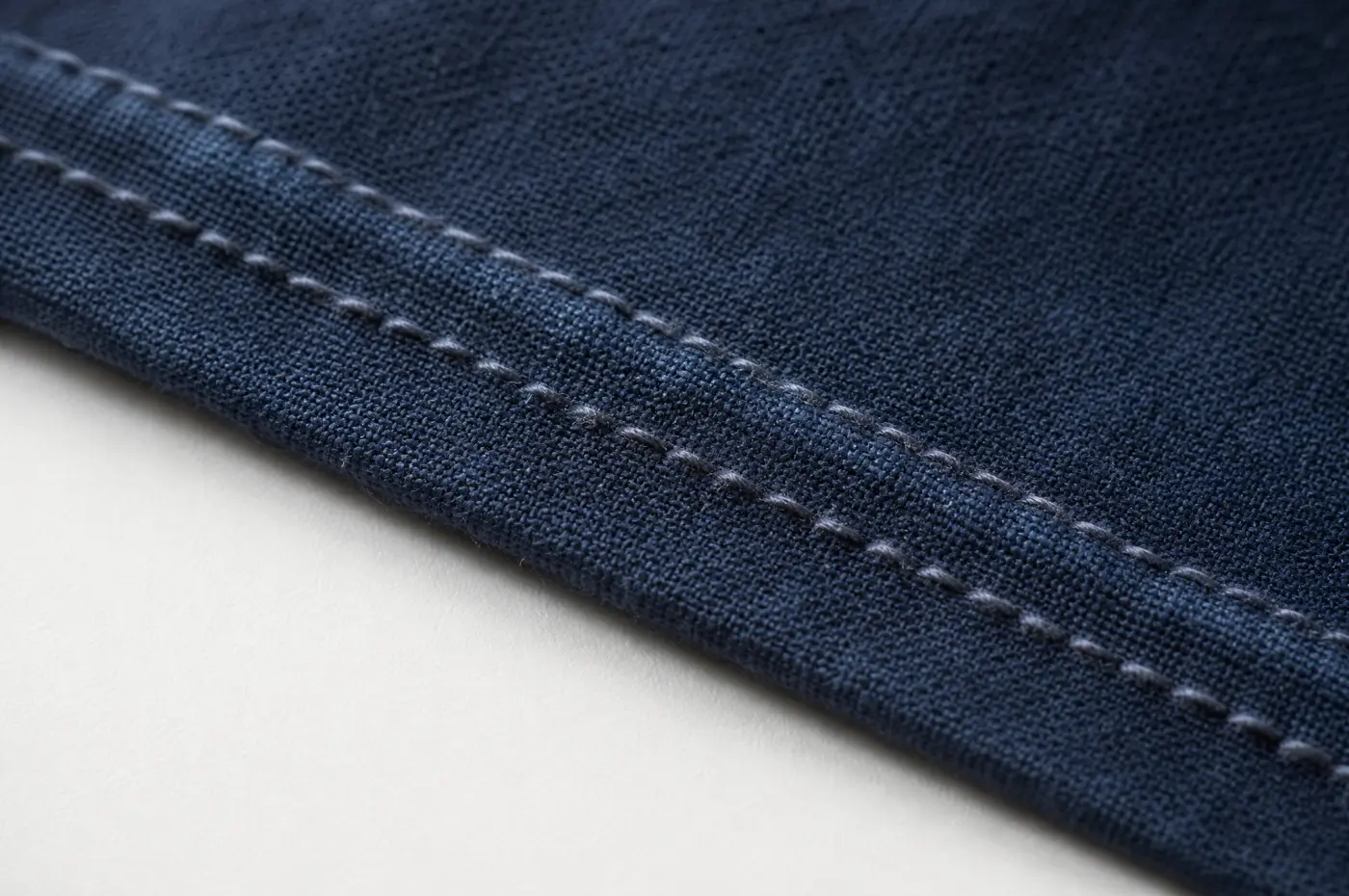
Topstitching, front placket
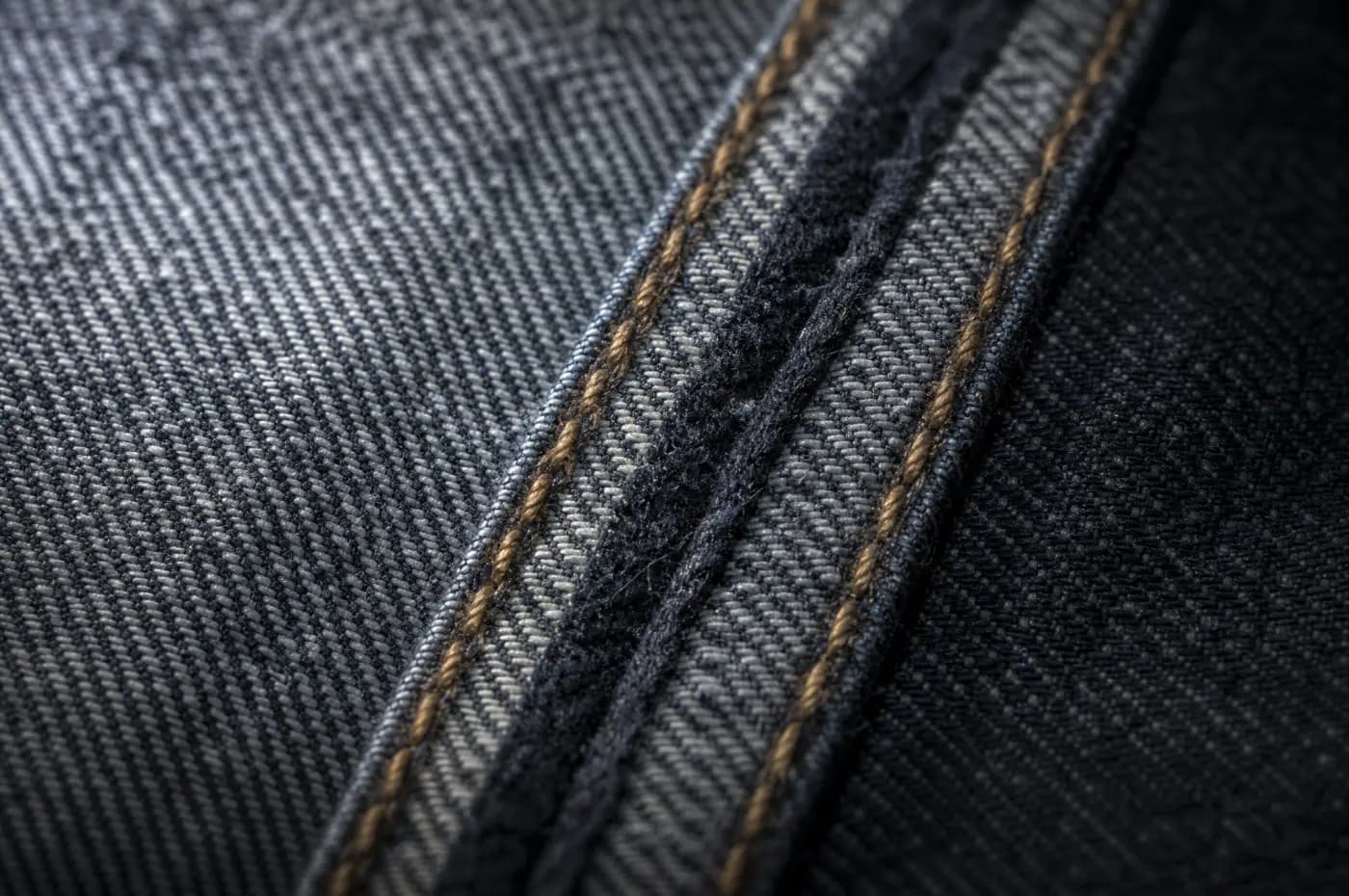
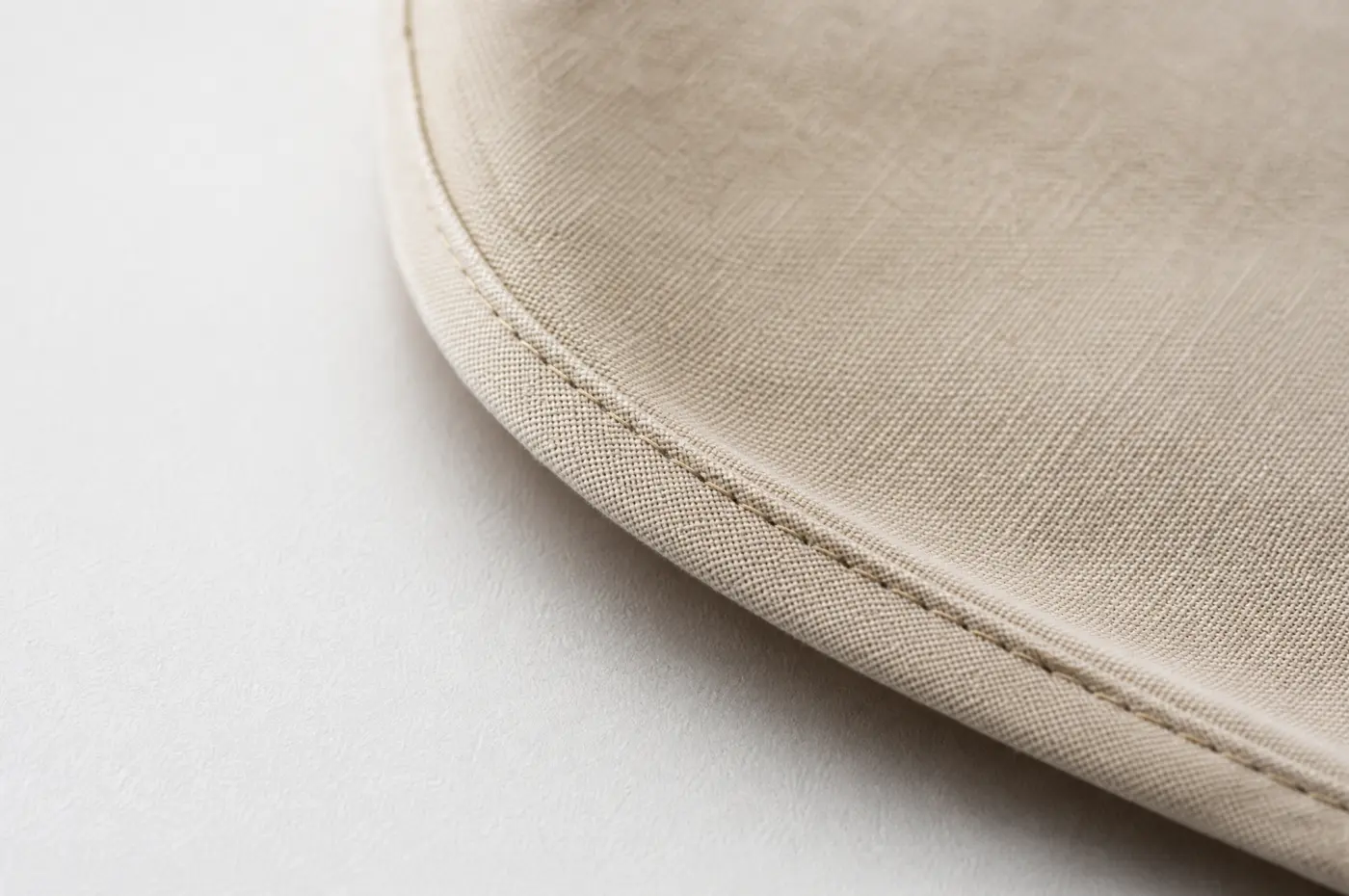
Stitch spacing measures about eleven stitches over two centimetres at the top of the run and about ten over two centimetres near the hem.
- ◦
Second button from the top
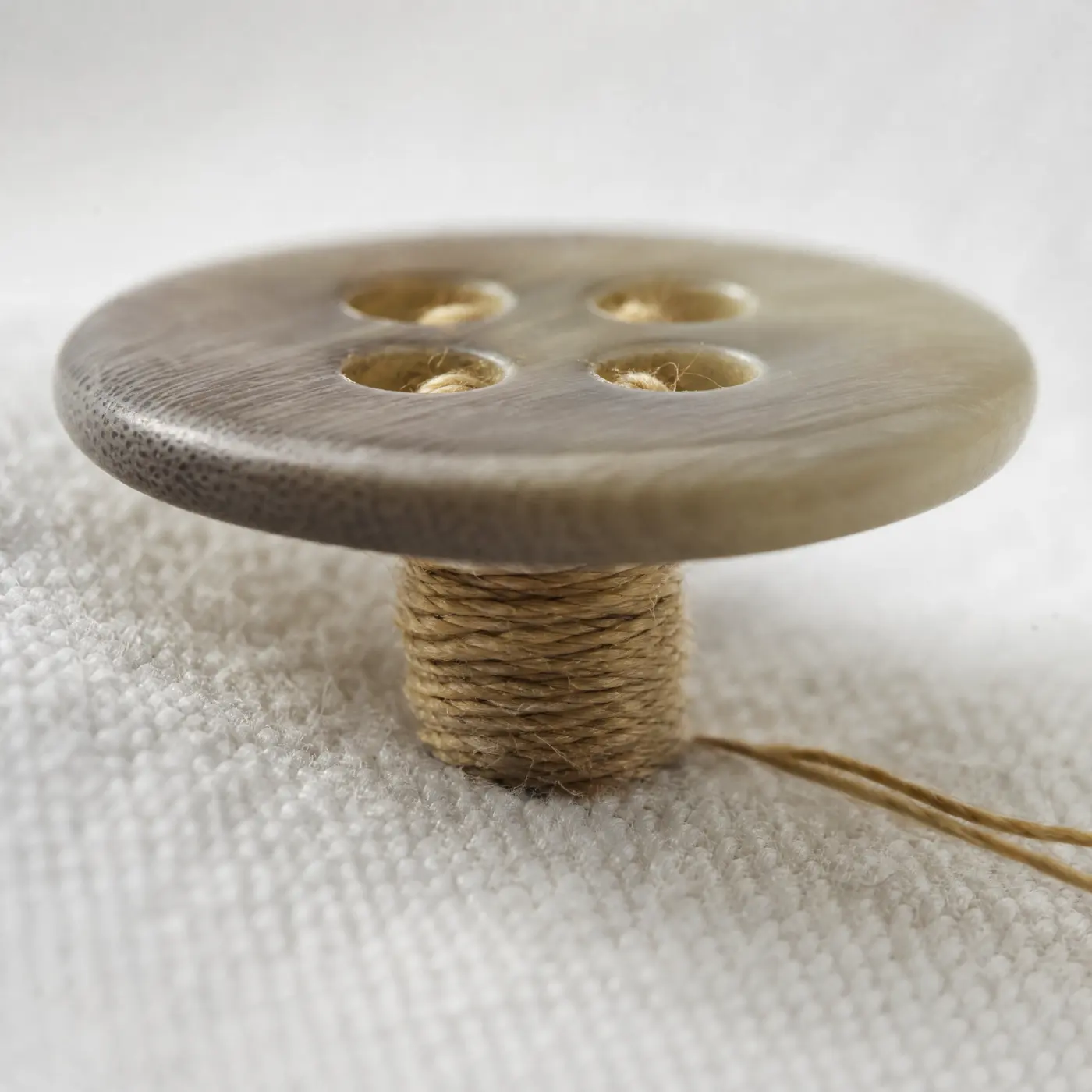
There is no wrapped thread stem under the button. The stitching lies flat against the placket.
- ◦
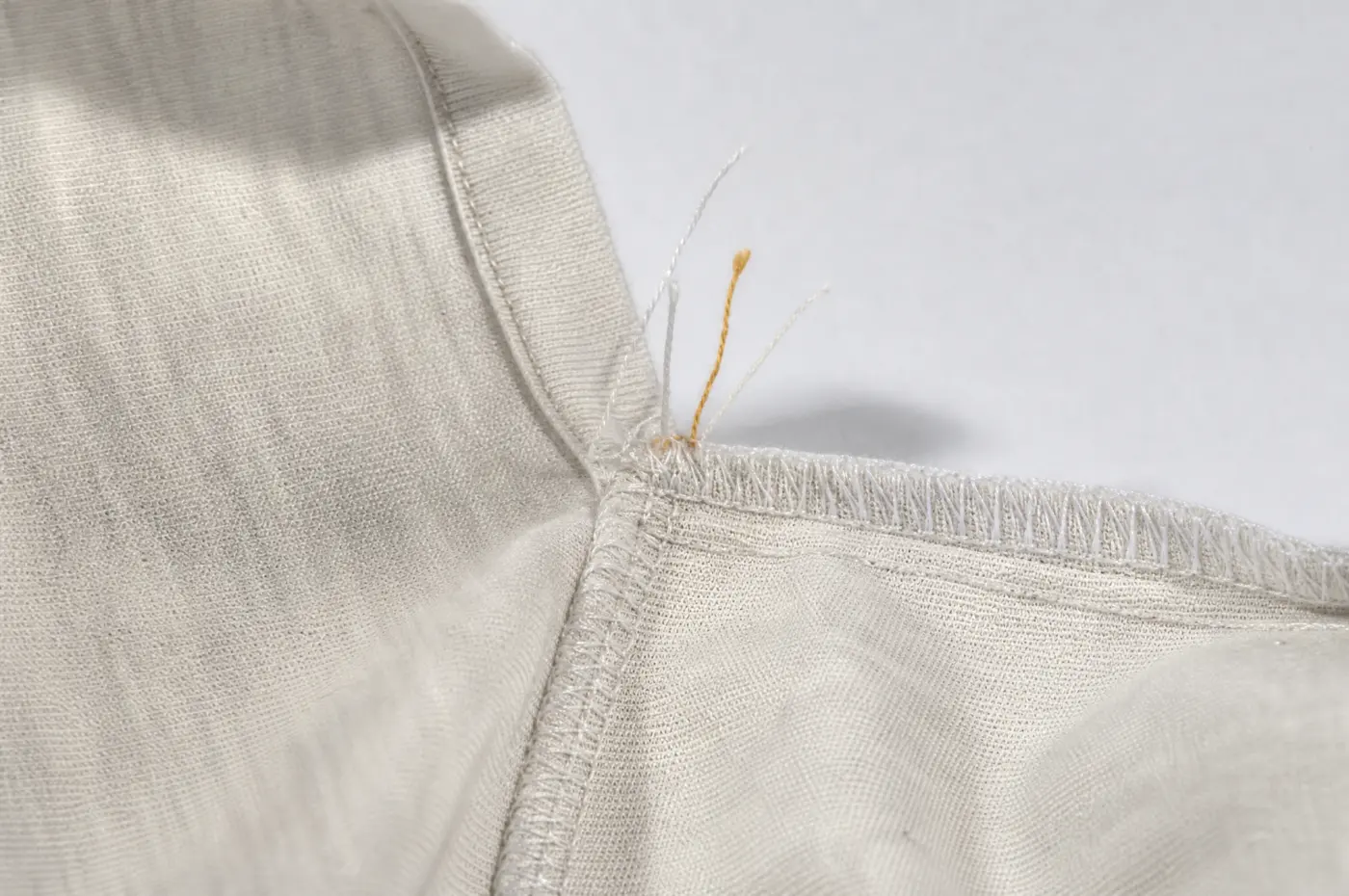
Inside, seam intersections
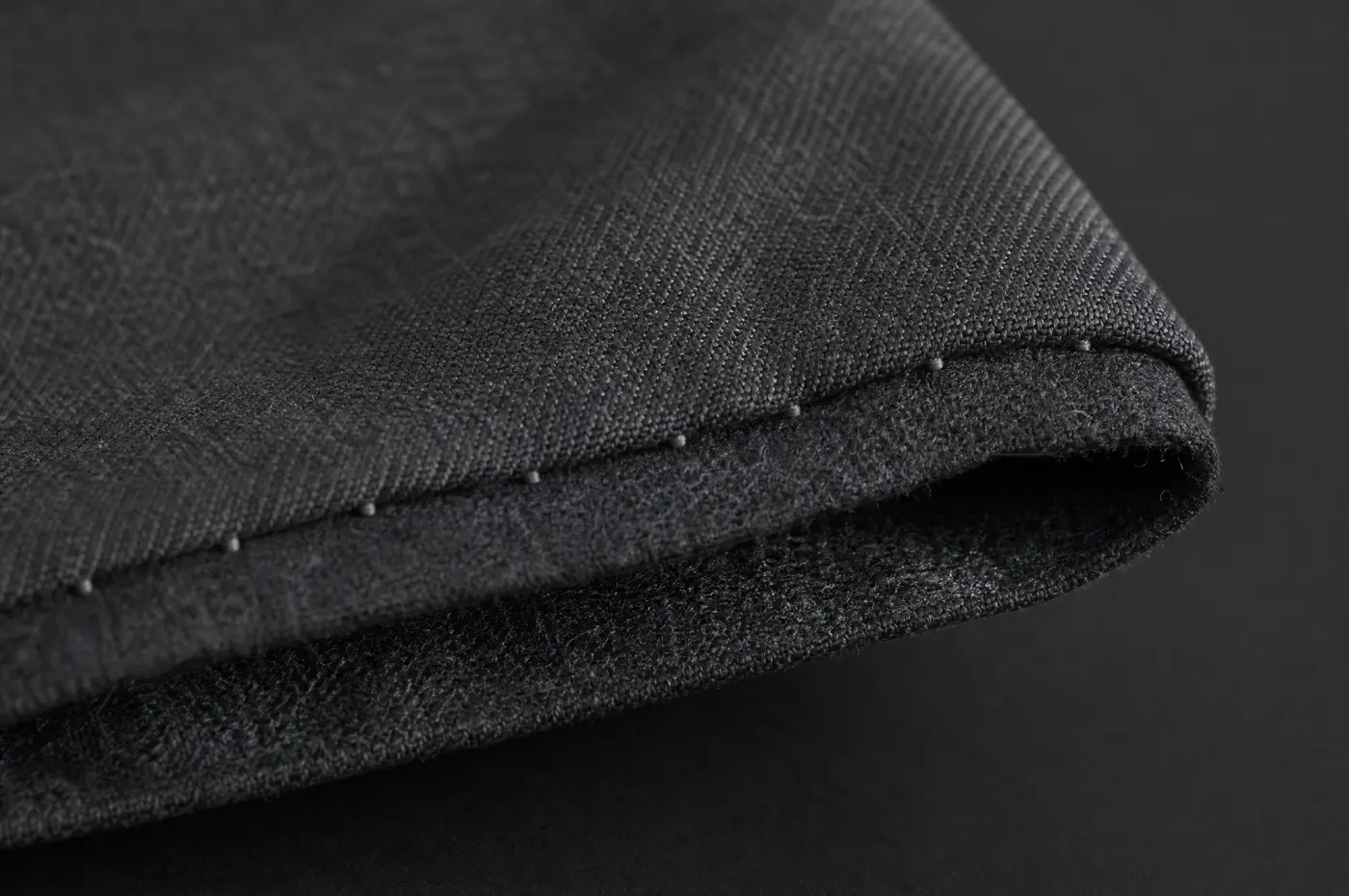
Four cut thread ends between eight and fifteen millimetres long.
This is normal
Looks like a fault, is not. Always present, never folded away.
- ◦
The white looping thread on a grey shirt. Overlock machines run with a standing thread colour and are rethreaded between production runs, not between garments.
- ◦
The four cut thread ends inside. They are removed by hand at the trimming station after sewing, and a few are routinely missed on any line.
- ◦
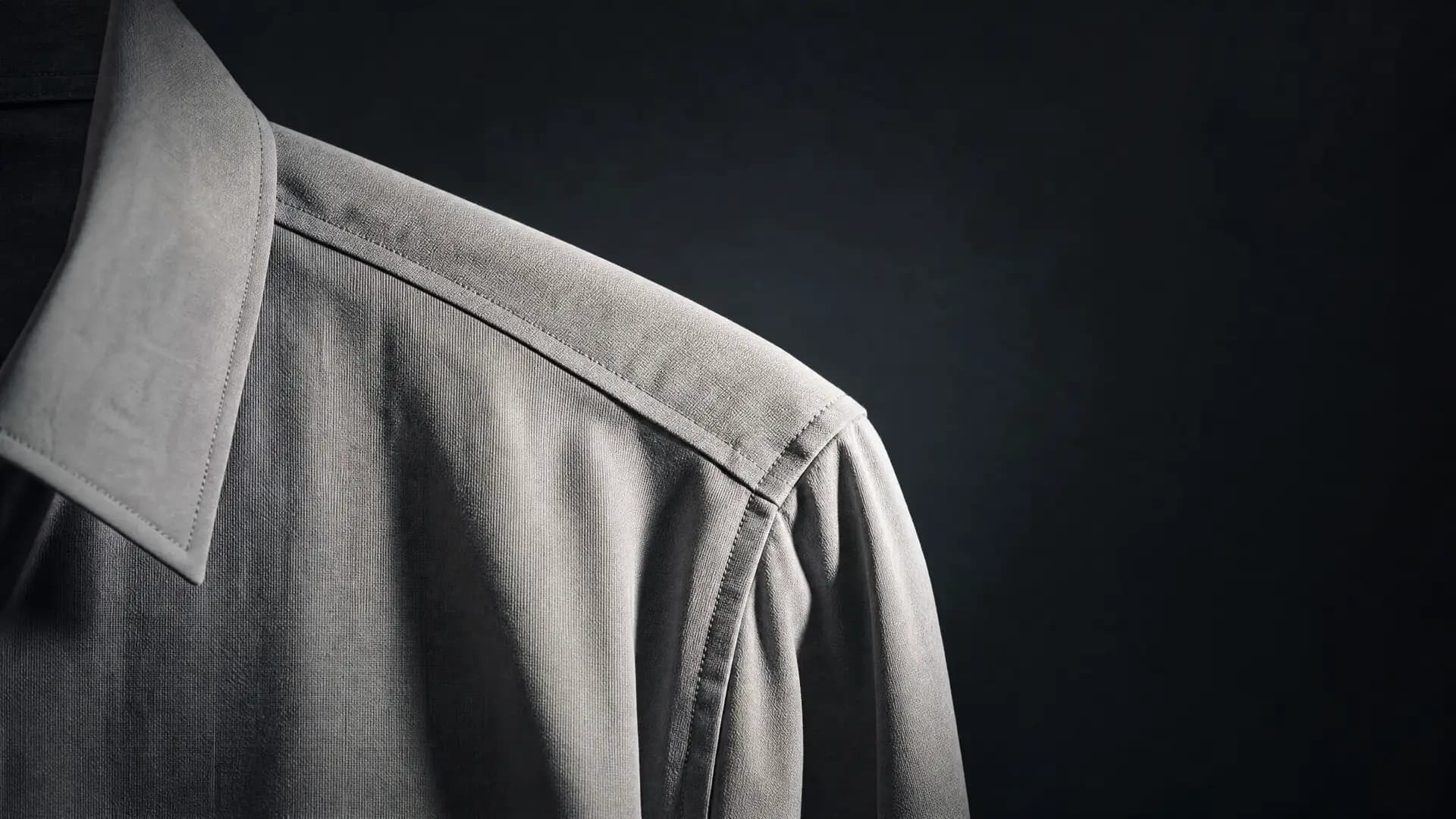
The check not matching on the curved part of the armhole seam. Two curved edges of different lengths cannot both hold the pattern in register — no cutting method fixes it.
- ◦
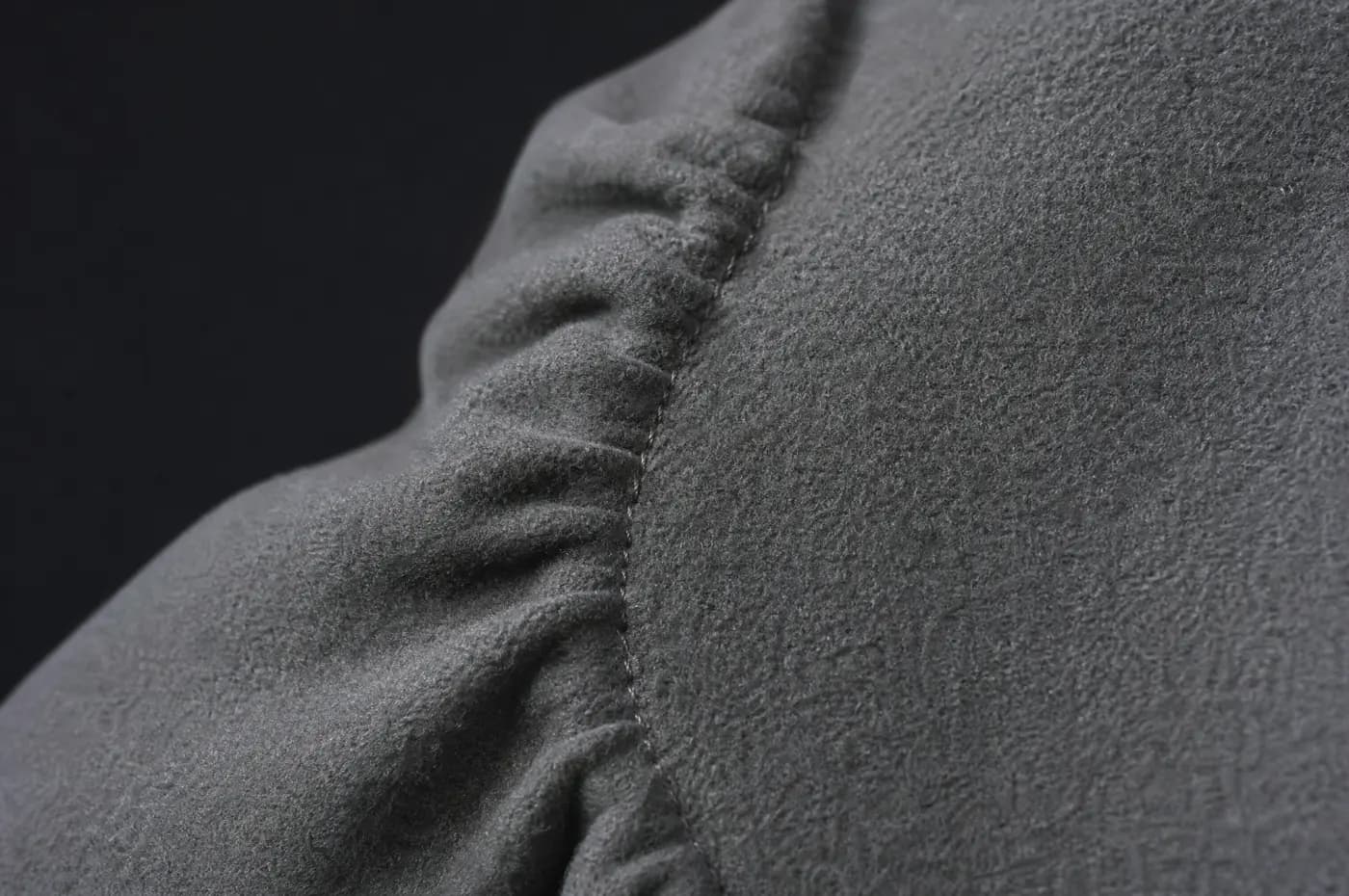
Slight puckering along the seam on a shirt straight out of its packaging. The fold compresses the cloth; it relaxes after pressing.
Can't be told from a photograph
Stated every time, because the limits are part of the reading.
- ◦
Fibre content and yarn quality. A photograph cannot settle either.
- ◦
How the seams will behave after washing, which depends on the finish and the fibre.
- ◦
Whether the interlining in the collar is fused or sewn — it is behind the collar facing.
- ◦
Thread strength. Colour and thickness are visible; breaking strength is not.
What each of those means in construction terms
- Horizontal check continues, vertical check is offset at the pocket.
- Matching a check in one direction requires the pocket to be cut in register with the panel on that axis. Matching both axes needs the pocket cut from a specific position on the cloth, which uses more of it. This is a cutting-room decision taken before anything was sewn.
- Seam allowance wrapped in looped thread.
- That is an overlocked finish, made in one pass on a dedicated machine. It stops the cut edge fraying. An enclosed folded seam is a different route to the same aim and takes more operations.
- Stitch spacing varies by about one stitch per two centimetres along the run.
- Density is a machine setting; variation along a straight run comes from the feed and the operator's speed. On a placket the stitch line is visible from the outside, so any variation shows there rather than staying inside the garment.
- No thread stem under the button.
- A stem gives the buttonhole layer somewhere to sit under the button. In light shirting there is little thickness to accommodate, and flat attachment is standard for the weight.
Where else to look on this garment
- →The other collar point — compare its stitch distance from the edge with the first one.
- →The inside of the cuff, where the same overlock finish either continues or changes.
- →The bottom of the placket, where the stitch line turns and the feed has to climb layers.
- →The hem at the side seam, which is the hardest part of a rolled hem to keep even.